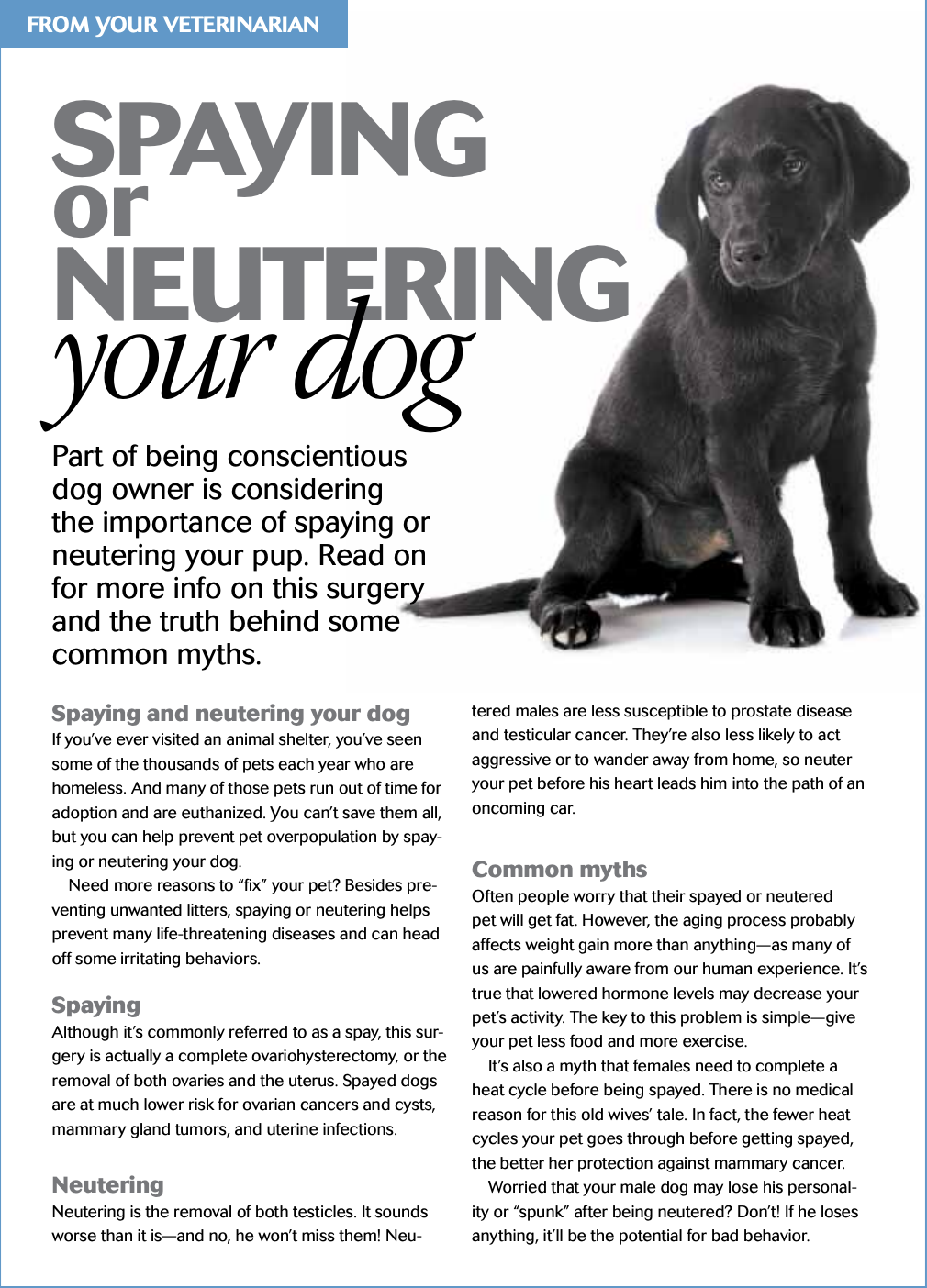
Adding a new puppy to the house hold is always exciting! Getting food, toys, and puppy proofing the house is usually the top priority, but make sure to think about putting together a plan to get your new fuzzy family member spayed or neutered.
The recommended age to spay or neuter dogs has changed drastically over the years.
The current recommendations are made using a study that looked into maximizing the benefits and limiting the complication risk for specific breeds. This study published in the Frontiers of Veterinary Science Journal is what we use to make recommendations.
If your dogs breed is not included in this study, we typically find a breed that is similar in size or closely related in order to make a recommendation for your pet.
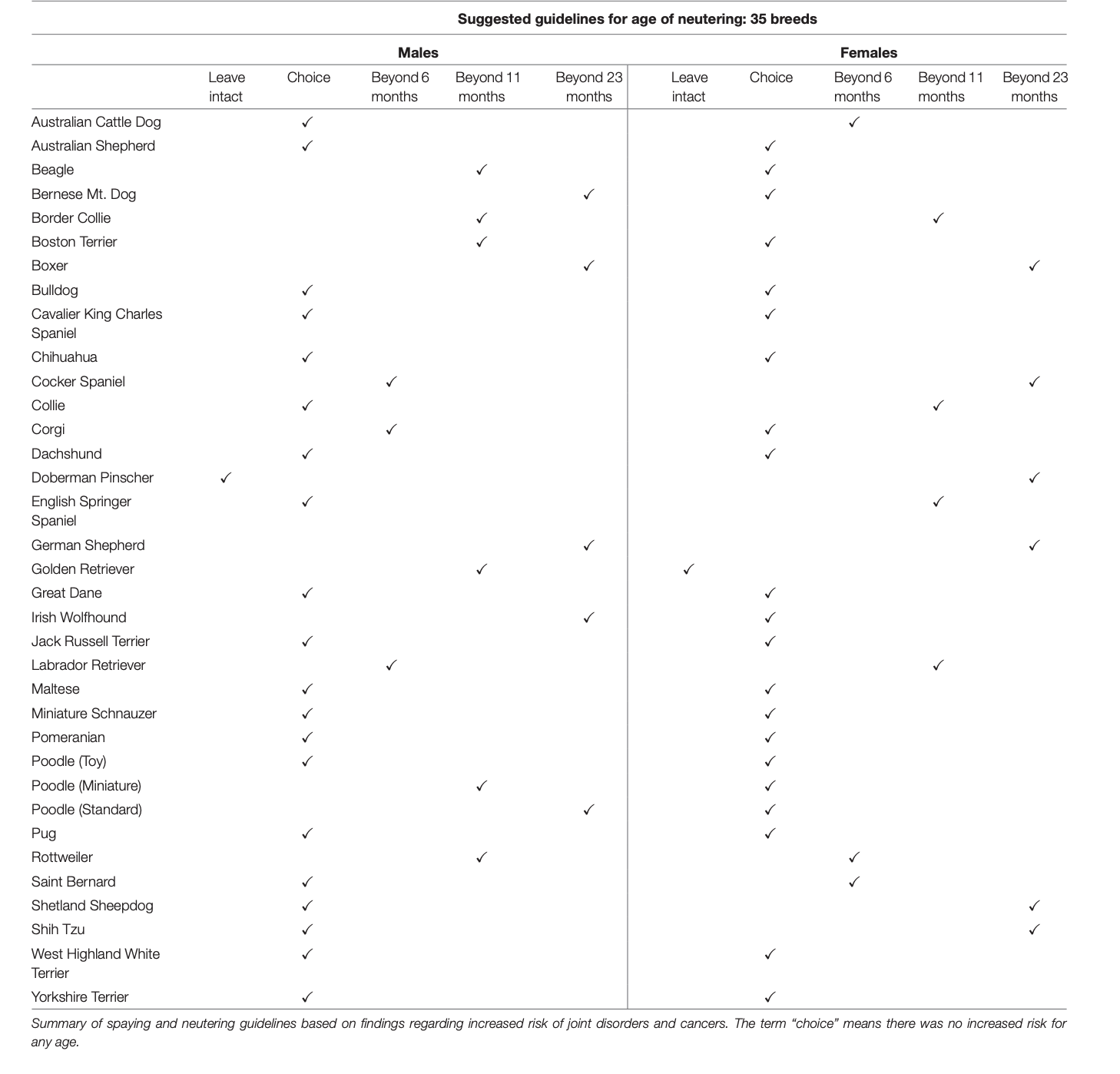
Hart BL, Hart LA, Thigpen AP, Willits NH. Assisting Decision-Making on Age of Neutering for 35 Breeds of Dogs: Associated Joint Disorders, Cancers, and Urinary Incontinence. Front Vet Sci. 2020 Jul 7;7:388. doi: 10.3389/fvets.2020.00388. PMID: 32733924; PMCID: PMC7359819.
- Just give us a call! If you and your pet are new to the clinic, our staff will get you set up with an appointment to get your pets medical records, make sure vaccinations are up to date, discuss pre operative bloodwork, and go over any questions you may have.
- There will always be some degree of risk associated with anesthetic procedures. We take every precaution to ensure that we can provided the safest anesthetic procedure possible for your pet. The pre surgical examination, running bloodwork, placement of IV catheters, monitoring equipment, and experienced staff help us do everything to keep your pet safe.
- There are some health conditions, medications, and genetic factors that can make anesthetic procedures more complicated, so make sure to schedule the pre surgical appointment so your pet's surgical team can do whats needed to keep your pet safe.
- We recommend bringing a list of questions to your appointment if you have any concerns about your pets next procedure.
- This was a very common thought for a long time, but more recent research has shown that waiting to spay your dog can increase the risk of developing mammary cancer , and has not been proven to affect the maternal instincts of a cat.
- Pregnancy also has its own risks and complications that can occur. Male cats also have risks and complications that are associated with being left intact.
- Dog litter sizes usually range from 1-12 puppies each depending on the breed of your dog. Without a plan and resources to care for a litter of puppies, these new additions can become very costly.
- The typical recovery time is 10-14 days. During this time your dog will be given a medication to manage pain after the surgery, and other medications can be discussed to meet your pets individual needs.
- An E-collar, or a surgical suit is highly recommended for your pets post surgery care. This prevents them from licking or picking at the incision site and helps prevent infection or opening up the site. Our staff are happy to help you select the correct size for your pet, and can give you some guidance on things to look for during your pre surgical exam!
- A post operative check up is highly recommended, typically around 10-14 days, so our technicians can check on the incision site and make sure things are healing properly. Even if everything looks good at home, we like to be able to ensure your pet is healing and be able to address any concerns.